---
title: "Sisu was a bad quality before it was a good one"
description: "In 412 million words of Finnish the famous noun appears 3,520 times and the ordinary verb people reach for instead appears 39,384. That gap is the article."
type: "article"
category: "finland-explained"
url: "https://finnishirl.com/blog/sisu-marketing-word"
canonical: "https://finnishirl.com/blog/sisu-marketing-word"
published: "2026-10-08"
updated: "2026-10-08"
author: "Andrey the Nomad"
site: "Finnish IRL"
license: "https://finnishirl.com/terms#ip"
---

# Sisu was a bad quality before it was a good one
URL: https://finnishirl.com/blog/sisu-marketing-word
Date: 2026-10-08
Updated: 2026-10-08
Category: finland-explained
Keywords: what does sisu mean, sisu finnish word, sisu meaning finland, is sisu real, sisukas meaning, finnish perseverance word
Summary: In 412 million words of Finnish the famous noun appears 3,520 times and the ordinary verb people reach for instead appears 39,384. That gap is the article.

Quick answer:
- Yes, it is a real word for a real quality, and the version that travelled is about a century old. Before that it named something else: the dictionary still carries a second sense, a fierce, bad or hard nature, as in pahansisuinen, bad-tempered.
- The virtue reading is roughly a century old. The first systematic study traces the shift through Finnish distance-running success around 1900 and the Winter War, after which American newspapers carried the word into English.
- Finns use it far less than the reputation implies. In 412 million words of Finnish subtitles the noun appears 3,520 times, against 39,384 for forms of jaksaa, the ordinary verb for having the energy to keep going.
- The research that finally examined it also asked what too much of it costs. Of 569 respondents, the answers grouped into harm to yourself, harm to the people around you, and impaired judgment.

What you'll learn:
- The sense of sisu that the dictionary still carries and the tourist board does not
- How a word for a bad temper became a national virtue, and roughly when
- What Finns say instead, with the counts
- What the first large study found when it asked about the costs

Body:

Kielitoimiston sanakirja gives <span lang="fi">sisu</span> two senses.

The first is the one that has been on a thousand posters: <span lang="fi">sitkeä, hellittämätön tahdonvoima, sinnikkyys, lannistumattomuus; uskallus, rohkeus</span>. Tenacious, unyielding willpower, perseverance, indomitability, daring, courage.

The second is <span lang="fi">(kiivas, paha, kova) luonto, luonteenlaatu</span>: a fierce, bad or hard nature. The example the dictionary prints is <span lang="fi">Jklla on paha sisu</span>, somebody has a bad temper.[^ks]

Both senses are current. The second one is older.

## The word before it was a virtue

Emilia Lahti's study of sisu, the first systematic one, opens with the etymology because the etymology is the surprise. In 1745 Daniel Juslenius defined <span lang="fi">sisucunda</span> in his dictionary as the place in the human body where strong feelings originate. In Estonian, <span lang="fi">sisu</span> still means the inside or the contents of a thing. In Finnish it became a character trait, and, as Lahti puts it, **it originally referred to a negative quality** - which is why the everyday adjective <span lang="fi">pahansisuinen</span>, bad-natured, still contains it.[^lahti]

The turn toward a virtue, on her account, was backed partly by Finnish long-distance running success in the late nineteenth and early twentieth centuries, and then elevated during the Winter War of 1939 to 1940 by Finland's resistance to a far larger Soviet army. Foreign correspondents reached for the word they kept hearing. The New York Times Magazine ran a piece on 14 January 1940 under the title "Sisu: A Word That Explains Finland", and Time later described it as a peculiarly Finnish brand of doggedness, capable of facing down death itself.[^lahti]

Be exact about what that means. The word was not invented for export. The *explanation* was: a country under attack, a press corps needing a frame, and a national quality arriving right on time.

![An ice hole cut in a frozen lake at Peurunka, with a metal ladder, a bench and a lifebuoy beside it](/images/words/optimized/blog-sisu-marketing-word-1-c649e084c4-1080.webp "The ladder is the part that matters. Somebody comes back up it, which is the half of the story the posters leave out")

## Finland was in on it

The clearest evidence that this was a construction rather than a discovery is domestic, and it is delightful.

In 1942, in the middle of the war, the newspaper <span lang="fi">Uusi Suomi</span> ran a competition to find the best definition of sisu. It was won by an eleven-year-old, Jouko Jokinen. Among the other prize-winning entries, as Yle lists them:[^yle]

<ul class="examples">
  <li class="example">
    <div class="fi" lang="fi">Sisu on tappelua tupella, kun puukko on katkennut.</div>
    <div class="en" lang="en">Sisu is fighting on with the sheath when the knife has snapped.</div>
  </li>
  <li class="example">
    <div class="fi" lang="fi">Sisu on tunne, joka pakottaa yrittämään kolmannen kerran ravintolaan, mistä jo kaksi kertaa on heitetty ulos.</div>
    <div class="en" lang="en">Sisu is the feeling that makes you try a third time to get into a restaurant you have already been thrown out of twice.</div>
  </li>
  <li class="example">
    <div class="fi" lang="fi">Sisu on kuin auton pienin vaihde: se pakottaa pyörät pyörimään vaikka paikallaan.</div>
    <div class="en" lang="en">Sisu is like a car's lowest gear: it forces the wheels to turn even when you are going nowhere.</div>
  </li>
</ul>

A country does not hold a competition to define a word it is confident it already understands. That third entry is also the most honest thing anybody has written about sisu: the wheels turn, and you do not necessarily move.

Seventy-three years later the same instinct produced the Ministry for Foreign Affairs' Finland emoji set, in which sisu got its own picture.[^emoji]

<div id="midpost-newsletter-slot"></div>

![A prepared cross-country ski track running through snow in Roihuvuori, Helsinki](/images/words/optimized/blog-sisu-marketing-word-2-bda6158d9e-1080.webp "A ski track in Roihuvuori. Finnish distance-running success is part of how the word turned from a fault into a virtue")

## What Finns actually say

Here the counting helps, because it separates the reputation from the usage.

[The same 412-million-word pass over Finnish subtitles](/blog/how-finns-say-yes) that ranked the words for yes also counted this one.[^opus] The noun turns up in its three commonest forms like this.

| word {fi} | occurrences |
| --- | --- |
| sisua | 3,001 |
| sisu | 444 |
| sisun | 75 |
| **noun, all three forms** | **3,520** |
| sisukas | 1,108 |
| sinnikäs | 1,662 |
| jaksa | 24,872 |
| jaksaa | 7,801 |
| jaksat | 4,208 |
| jaksan | 2,503 |
| **jaksaa, all four forms** | **39,384** |

The ordinary verb outnumbers the famous noun by more than ten to one. <span lang="fi">Jaksaa</span> is the word for having the energy or the endurance for something, and its negative is the single most Finnish thing on the list: <span lang="fi">en jaksa</span>, I have not got it in me, said dozens of times a day across the country about everything from a hill to a meeting.

Two things about the shape of that table are the actual lesson.

**The partitive wins.** <span lang="fi">Sisua</span> is nearly seven times commoner than the bare nominative, because the word lives inside fixed phrases about having some: <span lang="fi">on sisua</span>, <span lang="fi">ei ole sisua</span>, <span lang="fi">sisulla</span>. The bare nominative is the form a souvenir mug uses and the form a sentence almost never needs.

**The adjective is the living form.** <span lang="fi">Sisukas</span>, said about a person, does the work the noun gets the credit for.

One caveat on the corpus, and it cuts in the same direction. Subtitles are largely translated, so some of those 3,520 are a Finnish translator reaching for a word to render "guts" or "grit". Even with that pressure inflating it, the noun stays rare.

![A mass of runners in bright shirts rounding a lighthouse on the beach at Nallikari in Oulu](/images/words/optimized/blog-sisu-marketing-word-3-e72d817aba-1080.webp "Nallikari, Oulu. Nobody in this photograph would describe what they are doing as sisu")

## The half that does not fit on a poster

When Lahti's survey asked 569 people what the consequences of having too much sisu are, the answers coded into three themes: harm to the individual, harm to the individual's environment, and impaired ability to think and reason. The third started as a subtheme of the first and was promoted because of how much of the data it accounted for.

The first theme is the blunt one. Health problems from constantly overextending, accidents, injuries, burnout, and death. One respondent described too much sisu as denying the realities of life and the limits of human strength, and so denying the core of our humanity in ourselves and others.[^lahti]

<div class="callout callout--butter">
  <div class="callout-head"><span class="callout-title">What the researcher concluded</span></div>
  <p>Lahti's own summary is not the one the wellness shelf carries. Too much sisu, she writes, can lead to stubbornness, disconnection and other potentially harmful outcomes; sisu can be self-defeating as easily as self-enhancing.</p>
  <p>And a culture that glorifies mental toughness and achievement at the expense of justice, benevolence and integrity <b>puts itself on a dangerous path</b> toward a world that demands winners and disregards those who cannot or choose not to fit.</p>
</div>

A Finnish research group at VTT and the University of Helsinki has since gone at the same question with sensors and laboratory measurements, funded by what is now the Research Council of Finland, and arrived at the same division: there is good sisu and there is bad sisu.[^yle][^aalto]
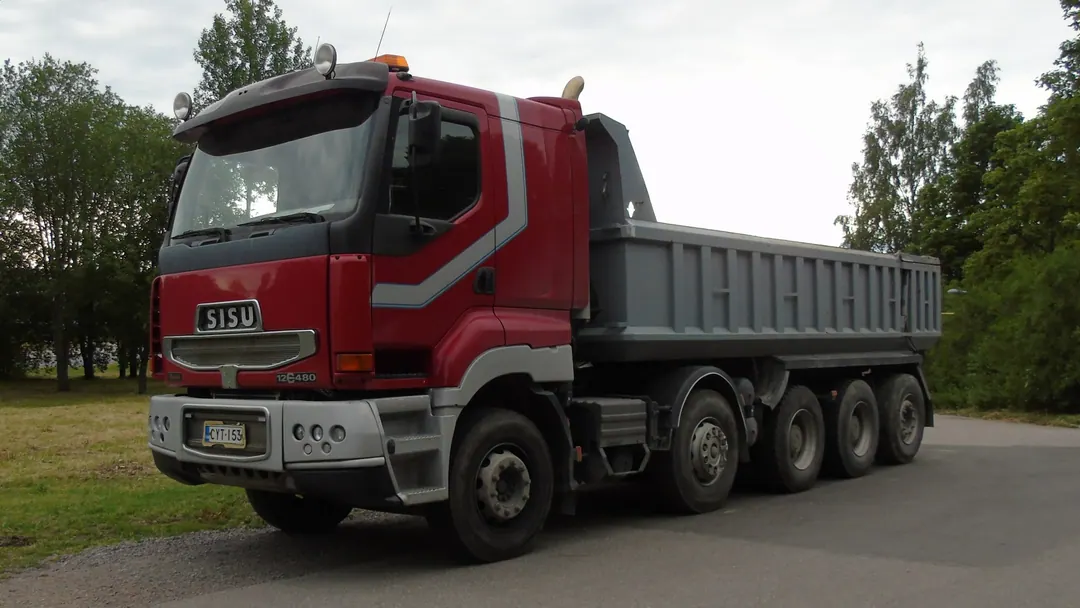
![A red Sisu tipper truck with the brand name across the grille, parked on a verge](/images/words/optimized/blog-sisu-marketing-word-4-cdda776319-1080.webp "Sisu is also a make of truck and a brand of pastille, which does the mystique no favours at all")

## What to do with the word

Use <span lang="fi">sisukas</span> about a person and <span lang="fi">jaksaa</span> about a day, and you will sound like somebody who lives here rather than somebody who read about it.

Keep the noun for the fixed phrases, where it belongs. And if you want the version of sisu Finns recognise without wincing, it is nearer the eleven-year-old's competition entry than the airport bookshop: the knife has broken, you are swinging the empty sheath, and nobody in the story is enjoying it.

[^ks]: [Kielitoimiston sanakirja: sisu](https://www.kielitoimistonsanakirja.fi/#/sisu) - Institute for the Languages of Finland. Both senses and their example sentences are quoted from the entry as reproduced by Yle

[^lahti]: [Embodied fortitude: An introduction to the Finnish construct of sisu](https://www.internationaljournalofwellbeing.org/index.php/ijow/article/view/672) - Emilia Elisabet Lahti, International Journal of Wellbeing 9(1), 2019, pages 61-82. The survey data is n = 500 and n = 569; the New York Times Magazine piece is credited there to H. Strode, 14 January 1940

[^yle]: [Tieteentekijät tutkivat, onko suomalaisesta sisusta hyötyä](https://yle.fi/a/3-11213278) - Yle, on a VTT and University of Helsinki study funded by what is now the Research Council of Finland, and the source for the 1942 Uusi Suomi competition entries

[^emoji]: [Emoji: Sisu](https://finland.fi/emoji/sisu/) - thisisFINLAND, published by the Finland Promotion Board and produced by the Ministry for Foreign Affairs

[^opus]: [OpenSubtitles 2024, Finnish monolingual file](https://object.pouta.csc.fi/OPUS-OpenSubtitles/v2024/mono/fi.txt.gz) - OPUS, University of Helsinki, hosted by CSC. Counts taken over 107,496,897 lines and 411,963,125 alphabetic tokens, lowercased

[^aalto]: [Pioneeritutkimus selvitti sisun merkityksiä](https://www.sttinfo.fi/tiedote/69855768/pioneeritutkimus-selvitti-sisun-merkityksia?publisherId=37936456) - Aalto University, on the first systematic study of the concept

FAQ:
Q: So is sisu a real thing or a marketing invention?
A: Real, and the marketing is also real. The concept is documented, studied and recognised by Finns. What was manufactured is its status as an explanation of the country, and that happened in a specific decade for specific reasons.

Q: Do Finns ever say sisu out loud?
A: Yes, most often in the fixed phrases: on sisua, ei ole sisua, sisulla. The partitive form sisua is the commonest one in the count, because the idiom is about having some rather than about the thing itself.

Q: Is sisu the same as grit?
A: Overlapping and not identical. Grit describes sustained effort toward a long-term goal; sisu describes what happens at the point where you should have stopped. A Finnish research group used grit as one of several international comparison terms rather than as a translation.

Q: What is pahansisuinen?
A: Bad-tempered, ill-natured. It is an ordinary modern word and it contains sisu in its older sense, which is the clearest surviving evidence of what the word used to mean.

Q: Is it strange for a foreigner to use the word?
A: Not strange, and easy to get tonally wrong. Finns hear the international version of the word and find it slightly funny, so using it earnestly about yourself lands differently from using it lightly about a situation.

Q: What should I say instead?
A: For everyday perseverance, jaksaa and its forms do almost all of the work. For a person, sisukas. For encouragement, tsemppiä. None of the three appears in the souvenir version of Finnish.

Q: Was sisu really what won the Winter War?
A: That is the 1940 press framing rather than a historical finding. What is documented is that foreign correspondents reached for the word Finns kept using, and that it stuck in English for a generation afterwards.

Q: Why does Finland keep exporting it if Finns are embarrassed by it?
A: Because it works. It was one of the pictures in the country's first official emoji set, and the word has an international audience the domestic one does not share.

Sources:
- Embodied fortitude: An introduction to the Finnish construct of sisu: https://www.internationaljournalofwellbeing.org/index.php/ijow/article/view/672
- Tieteentekijät tutkivat, onko suomalaisesta sisusta hyötyä: https://yle.fi/a/3-11213278
- Kielitoimiston sanakirja: sisu: https://www.kielitoimistonsanakirja.fi/#/sisu
- Pioneeritutkimus selvitti sisun merkityksiä: https://www.sttinfo.fi/tiedote/69855768/pioneeritutkimus-selvitti-sisun-merkityksia?publisherId=37936456
- Emoji: Sisu: https://finland.fi/emoji/sisu/
- OpenSubtitles 2024, Finnish monolingual file (OPUS): https://object.pouta.csc.fi/OPUS-OpenSubtitles/v2024/mono/fi.txt.gz

Related words: sisu, en-jaksa, myotahapea, kalsarikannit
